Do Electric Fireplaces Need Serviced?
Yes, an electric fireplace needs light servicing. It has no gas lines or chimney, but dust, a lint-clogged vent and a worn cord still need checking once a year to keep it safe and running well.
On this page (12 sections)
- Do electric fireplaces need serviced at all?
- What does a yearly service actually involve?
- How do you clean an electric fireplace safely?
- How do you check the cord, plug and outlet?
- What does servicing cost, and when should you call a pro?
- How much power does it use, and does that affect servicing?
- Which electric fireplaces need less attention?
- Do you need to vent an electric fireplace or add a flue?
- How often should you reset the heater and check the thermostat?
- What should you do if the fireplace is hardwired?
- How do you know an electric fireplace is due for service?
- So, do electric fireplaces need serviced, and who should do it?
Yes, an electric fireplace needs light servicing. Unplug it, clean the vents and glass, and check the cord and outlet once a year.
That routine keeps the heater safe and the flame looking right, and it takes most people under an hour.
The confusion is fair, because people ask do electric fireplaces need serviced the same way a wood or gas unit does. There is no chimney sweep or gas-safe check here.
The jobs are simple, and most of them are cleaning and a visual safety pass.
Do electric fireplaces need serviced at all?
Yes, but only lightly. An electric fireplace has no fuel, no flame to maintain and no flue, so the service list is short and mostly about dust and the power cord.
The two parts that wear are the heater and the electrical connection. A heater pulls heavy current, and the Forte 40 pulls a max of 12 amps, so a loose plug or a worn cord is the main safety risk over time.
Dust is the other one. Fine dust settles on the heater fins and inside the air path, and that is what produces the burnt smell on the first cold night of the year.
What does a yearly service actually involve?
A yearly service is a clean, a visual check and a run test. No technician is required for the first two, and the run test is simply watching and smelling for problems.
The clean covers the air intake, the outlet grille, the glass front and the area behind the ember bed. The visual check covers the plug, the cord, the outlet and the wall fixings.
The run test means switching on the heat for a few minutes and confirming the fan is quiet, the heat is steady and nothing smells hot or plastic.
How do you clean an electric fireplace safely?
Unplug the unit and let it cool first. Vacuum the vents and heater intake with a brush attachment, then wipe the glass with a soft cloth and a mild cleaner.
- Unplug before any cleaning, always.
- Use a vacuum brush on the intake and outlet grilles.
- Wipe the glass with a damp cloth, never a soaking one.
- Keep water out of the heater and away from wiring.
- Let everything dry before you plug it back in.
Dust in the ember bed needs a soft brush, not a vacuum nozzle pressed against the logs or crystals. A gentle pass keeps the flame effect crisp without moving the pieces around.
How do you check the cord, plug and outlet?
Look for heat marks, a loose fit and cracks. A plug that sits loose, a scorched outlet face or a cord that feels warm in use means stop and get an electrician.
Run your hand along the cord with the unit off and check for nicks, flattening or a bent plug pin. The cord must not run under a rug or behind a closed door where it can be pinched.
If your wall unit needs to come off to reach the plug, a stud finder makes the job easier. The DEWALT DW0100 finds wood and metal studs to 3/4 in and flags live wires, which helps when you re-hang a wall-mounted unit.
What does servicing cost, and when should you call a pro?
Most of the work is free, and a paid call is only for a fault. Cleaning and checks are DIY.
A heater element, thermostat, fan or wiring repair needs a qualified electrician or the maker's service partner.
Call a pro for these signs:
- A burning plastic smell or visible smoke.
- The heater cuts out soon after it starts.
- The fan grinds or squeals.
- The breaker trips when the heat comes on.
- The plug or outlet is warm after use.
These are the same warning signs as any high-draw appliance, so treat them the same way: switch off at the breaker and get it looked at.
How much power does it use, and does that affect servicing?
A wall unit draws a lot of current, which is why the electrical check matters. The Touchstone Forte 40 maxes at 12 amps, so it can run on a 15-amp circuit, though a 20-amp circuit may be needed with other electronics on the same line.
A power meter lets you watch that load for yourself. The P3 Kill A Watt plugs in between the outlet and the appliance and counts kilowatt-hours by day, week, month or year.
It is rated for 115-volt appliances up to 15 amps, which suits a 12-amp fireplace. Read the draw with the heater on high and note it, then compare it next year after a clean to see if anything has changed.
Which electric fireplaces need less attention?
Recessed and wall-mounted units need the same light service. The work depends on where dust and hair collect, not on the style of the firebox.
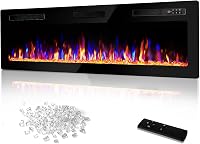
The Touchstone Forte 40 is a recessed in-wall model with 5 flame settings and 30 ember color options. It runs with or without heat, hardwired or on its 6-foot cord, and the sides and back stay cool to the touch when the heat is on.
Flame-only use lowers the electrical load and slows the heater dust buildup, but the glass and vents still need the yearly wipe. Our guides to a linear electric fireplace, a thin electric fireplace and a 3 sided electric fireplace show the layout options if you are choosing a unit for a feature wall.
Do you need to vent an electric fireplace or add a flue?
No. An electric fireplace is ventless.
There is no chimney, no flue and no outside air intake, so servicing never involves a sweep or a flue brush.
That is why the annual job is mostly dust. A gas fireplace needs a technician for the burner and the flue, while an electric one needs a vacuum and a cord check.
Our post on whether you need to vent an electric fireplace explains why ventless does not mean it needs less cleaning.
How often should you reset the heater and check the thermostat?
Reset only when the unit shuts itself off, and check the thermostat once a year. Most units have an overheat cutout that trips when the intake is blocked by dust or a pushed-in curtain.
Switch off, unplug, let it cool and clear the vent before you reset. If it trips again soon after, that is a fault, not a dust problem.
Check the thermostat by setting a temperature and seeing if the heater holds it. A heater that runs flat out without shutting off, or one that never comes on, needs a pro.
So does a flame effect that flickers oddly with the heat off.
What should you do if the fireplace is hardwired?
Treat a hardwired unit as a fixture and book an electrician. When the fireplace is wired into the wall rather than plugged in, you cannot unplug it for cleaning or a cord check yourself.
The Forte 40 ships with a 6-foot cord for a standard outlet and is also hardwire ready for an in-wall install. If yours is hardwired, get an electrician to check the connection and the breaker once a year alongside the clean.
How do you know an electric fireplace is due for service?
Look for a smell, a sound, a cutout or a slow warm-up. These signs mean the yearly clean has been skipped or a part is failing.
- A smell of burning dust for more than the first few minutes.
- A fan that is louder than it used to be.
- The heater cutting out on high.
- A warm plug or a warm wall plate.
- Glass that stays cloudy after a wipe.
Any one of these is a reason to unplug it and look closer. A scorched outlet or a burning plastic smell means switch off at the breaker and call an electrician.
So, do electric fireplaces need serviced, and who should do it?
Do electric fireplaces need serviced? Yes, with a light yearly clean and electrical check that you can mostly do yourself.
Unplug, vacuum the vents, wipe the glass, inspect the cord and test the heat. Book a pro only for heater, fan, thermostat or wiring faults.
The decision rule is simple. If the unit is dusty or the flame looks dull, do the clean.
If it smells of burning plastic, the plug is warm or the breaker trips, stop and call an electrician.
For the bigger install questions, our guides to venting and to wall unit styles cover what to plan before the next clean.
Frequently asked questions
Does an electric fireplace need an annual service like a gas one?
No. An electric fireplace has no burner, flue or pilot light to inspect, so a licensed technician visit is not routine.
A yearly dust clean and a cord and plug check cover most of the work.
How do I clean the inside of an electric fireplace?
Unplug it, let it cool, then vacuum loose dust from the vents and heater area with a brush attachment. Wipe the glass with a soft cloth and a mild cleaner, and keep water away from the heater and wiring.
Why does my electric fireplace smell when the heat runs?
Dust burning off the heater element usually causes it. A clean vent and heater intake often clear it.
A burning plastic smell or smoke means you should switch it off at the breaker and get it checked.
Can I service my electric fireplace myself?
You can do the cleaning, the visual cord check and the reset. Heater parts, wiring repairs and thermostat faults call for a qualified electrician or the maker's service partner.
How often should I check the cords and outlet?
Check the plug and cord every few months and give them a closer look once a year. Heat, a loose plug or a scorched outlet means stop using the unit until it is fixed.