Are Electric Fireplaces Worth It?
Yes, an electric fireplace is worth it if you want year-round flame ambiance and a little spot warmth without a chimney, gas line or vent. It is not worth it if you need it to heat a whole house or replace a furnace.
On this page (7 sections)
- Are electric fireplaces worth it for most homes?
- What does an electric fireplace actually cost to run?
- When is an electric fireplace not worth it?
- Which type of electric fireplace fits your room?
- Do electric fireplaces look real?
- Are electric fireplaces safe to run?
- Which electric fireplace should you pick?
Yes, an electric fireplace is worth it for most people who want the look and feel of a fire without the cost of a chimney or gas line. It gives you flames any time of year and a little warmth when a room feels cool.
The catch is heat. An electric fireplace supplements a room; it doesn't replace your main heating system.
Whether it's worth it comes down to why you want one and how you'll use it.
Are electric fireplaces worth it for most homes?
For ambiance and spot warmth, yes. A plug-in or hardwired unit adds a focal point to a living room, bedroom or basement without the venting a wood or gas fire needs.
The realistic flames run on their own, so you can enjoy the look in July as easily as in January. That year-round use is the main thing a wood fire can't match.
Warmth is where expectations matter. A typical heater draws up to about 1,500W and warms a limited area, often around 400 square feet.
Think of it as taking the edge off a cool room, not heating a house.
Installation is the other draw. Most wall units plug into a standard outlet, and some can be hardwired.
There's no chimney, no gas line and no ash to clean.
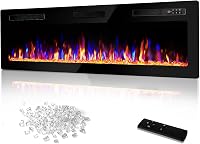
The Touchstone Forte 40 Inch shows how much comes in one box. It arrives with the log, crystals, remote control and even the drywall anchors and screws, so there's no separate kit to buy.
It measures about 40 inches wide by 26.5 inches high by 5.1 inches deep and weighs 45 pounds. The glass and black steel finish gives it a clean look that suits a modern wall.
The PuraFlame Western Insert takes the opposite path. It's built to slide into an opening you already have, measuring about 35 inches wide overall with a firebox of roughly 32 by 25 inches.
That makes it a natural fit for a hearth that's sat unused for years.
What does an electric fireplace actually cost to run?
Flames alone cost very little; the heater is the real expense. Running a 1,500W heater for an hour uses about 1.5 kWh, so your cost depends on your local rate.
At a typical rate, that hour lands in the range of a few cents to a couple of dimes. Multiply it across an evening of use and you have a small, steady addition to the bill, not a shock.
Run the unit with heat off most of the time and the cost is negligible. That's the smart way to get the ambiance without paying to warm a room you're already heating.
The P3 Kill A Watt monitor connects between the appliance and the outlet. It counts consumption in kilowatt-hours and calculates the expense by day, week, month or year, so you can measure your own unit instead of guessing.
The 15-amp capacity covers a standard 1,500W fireplace. It's a small 6.4-ounce unit with a large LCD screen that reads consumption the same way your utility meter does.
What should you know about the heater settings?
Both fireplaces here split their heat into high and low. The PuraFlame Western runs at 750W on low and 1,500W on high.
The Touchstone Forte has a thermostat that runs from 68 to 88 degrees, so it cycles on and off to hold a set temperature instead of blasting constantly.
Timers matter more than people expect. The Forte includes a shut-off timer, and the PuraFlame has a built-in heat timer for one to eight hours.
Setting a timer means you can enjoy the flames as you fall asleep without leaving the heater running all night. Both units also list overheat protection as a safety backup.
Check the power draw before you plug in. The Forte pulls a maximum of 12 amps and comes with a 6-foot cord, so it runs on a 15-amp circuit if little else shares that line.
A 20-amp circuit may be needed if other electronics sit on the same breaker. The PuraFlame plugs in and cannot be hardwired, so plan its spot near an outlet.
When is an electric fireplace not worth it?
Skip it if you need it to heat a large open space or replace a furnace. A 1,500W unit won't carry a whole floor, and it isn't built to be a primary heat source.
Both makers say so in their own product notes.
Also skip it if you already have a working wood or gas fireplace you love. The electric version gives you convenience and cleanliness, not the real thing.
It's also a poor fit if you want to avoid electrical work entirely. A recessed or hardwired install needs an electrician or a careful DIY job, plus a dedicated circuit in some cases.
The Forte ships with assembly instructions, but wiring a hardwired unit into a wall isn't a casual weekend task for everyone.
And if the room already runs warm, a heater you'll never use is wasted money. A flames-only wall unit or a smaller insert makes more sense there.
The good news is that most models let you switch the heater off and keep the flames, so the purchase isn't wasted just because the warmth isn't needed.
Which type of electric fireplace fits your room?
The room's shape and your wall space decide the type. A flat wall suits a linear or wall-mounted unit, a feature corner suits a three-sided model, and an old fireplace opening suits an insert.
Wall-mounted and recessed units
These mount on or inside a wall and come in wide, low shapes. A three sided electric fireplace suits a room divider or a corner where you want the flames visible from more than one angle.
For long, modern walls, a linear electric fireplace stretches the look across the space. If your wall is shallow, a thin electric fireplace slips into less depth than a full recess.
The Touchstone Forte is built for recessed in-wall mounting. It attaches to framing studs and its sides and back stay cool to the touch with the heat on.
If you'd rather not cut the wall, it also includes a wall-mount bracket so you can hang it flat. The unit is ventless, which is why it can go into rooms without a flue.
Inserts
An insert drops into an existing fireplace opening. It's the least disruptive upgrade if you have a hearth you no longer use.
Our guide to whether electric fireplace inserts are worth it covers the trade-offs in detail.
The PuraFlame Western fits a firebox opening around 32 x 25 inches and runs on a standard 120V outlet. The adjustable thermostat and three flame settings let you run it for the look or for warmth.
Its flat bottom means it can sit on the floor of the opening directly, so there's no building work to get it in.
If your old fire is gas or wood, the fireplace needs to come out first. Remove the old logs so the opening is clear, block the chimney and make sure a plug outlet sits within reach.
The insert then slides into the cavity and the glass front sits flush.
Do electric fireplaces look real?
The good ones look convincing, especially from a few feet away. Modern LED flames with ember beds, logs or crystals read as a real fire at a glance.
Touchstone says the Forte's flame sits behind glass with a real fire look and five settings, from a soft ember glow to an intense blaze. You can use a log, crystals or a mix of both.
The trick is distance: up close you'll notice it's an effect, and that's true of any electric unit.
The PuraFlame takes a more traditional route. It uses a life-like resin log sitting on a grate above the ember bed, with a three-sided interior brick wall behind it.
That's the look of a wood-burning fire rather than a modern ribbon of flame. Its three flame intensity settings let you dial the fire up or down to match the mood.
Sound and smell are what give it away most. There's no wood smoke from either unit.
The PuraFlame adds a fire crackling sound feature, which covers part of the gap. If that atmosphere matters to you, look for units with built-in sound.
Are electric fireplaces safe to run?
Yes, when installed as the instructions say. They give off no smoke or fumes, and the surfaces are designed to stay cool enough to touch during normal use.
Clearance is the main safety point. Touchstone recommends at least 8 inches between the top of the Forte and a TV, mantel or ceiling, because the front vents push warm air out.
Keep curtains and furniture away from the heater outlet too. Because the warm air comes out the front, the unit stays safe to mount under a TV as long as that gap is respected.
Check the circuit before you add one. A 1,500W unit can pull up to 12 amps, so a 15-amp circuit works if little else runs on it.
A shared circuit may need a 20-amp setup or a hardwired install. The PuraFlame uses a 6-foot black cord that comes out the right side facing the unit, so keep that in mind when planning the outlet.
Overheat shutoff is common on inserts like the PuraFlame, which turns off automatically if it gets too hot. That's a useful backup, not a substitute for sensible placement.
Its glass also stays cool to the touch, which helps in homes with children or pets.
Which electric fireplace should you pick?
Pick a wall or recessed unit for a modern look and easy install; pick an insert to revive an old fireplace. The Touchstone Forte 40 Inch suits a living room wall with its five flame settings, log and crystal options and smart controls.
It works with Alexa, Google Home or a smart mobile app, so you can change the flame or heat from your chair.
The remote needs AAA batteries, which aren't included. The PuraFlame Western Insert is the simpler fit if you have an unused hearth and a nearby outlet.
The P3 Kill A Watt helps you confirm what either one costs to run.
Before you buy, measure twice. Check the wall cavity or firebox opening, the outlet location and the space above for a TV.
The Forte's chamber measures about 39.25 inches wide, 28 inches high and 5.5 inches deep, so compare those figures to your opening before ordering. Then decide whether you want flames only or a real heater, because that answer shapes both the model and the running cost.
If you're still weighing whether electric fireplaces are worth it for your home, start with why you want one and let that guide the pick.
Frequently asked questions
Can an electric fireplace run without putting out heat?
Yes. Most units let you show flames only, so you get the look in summer without adding warmth to the room.
Flip the heater on when the room feels cool and off when it doesn't.
Will an electric fireplace raise my electric bill?
Flames alone draw very little. The heater is the cost, and a 1,500W unit run for an hour uses about 1.5 kWh.
Use it as a supplement and the added cost stays modest.
Do electric fireplaces need a vent or chimney?
No. They run on a standard outlet or a hardwired circuit and give off no smoke or fumes, so there is nothing to vent.
That is why they fit in apartments, basements and rooms without a flue.
Can I put an electric fireplace under a TV?
Often yes, if you leave clearance. Touchstone recommends at least 8 inches between the top of the Forte and a TV or mantel, because the front heater vents send warm air forward.
How much space will an electric fireplace heat?
Treat it as spot warmth. The Touchstone Forte covers up to 400 square feet and puts out 5,100 BTUs, which takes the chill off a room but won't carry a whole floor on a cold night.