How Deep Is a Recessed Electric Fireplace?
Recessed electric fireplace depth varies by model. Measure the usable wall cavity and compare it with the fireplace’s required opening and clearances before choosing a fully recessed, semi-recessed, or wall-mounted setup.
On this page (8 sections)
- What does recessed electric fireplace depth mean?
- Can a recessed electric fireplace fit in a 2 x 4 wall?
- Which dimensions should you check before framing?
- When should you choose a semi-recessed or wall-mounted setup?
- What can block a recessed fireplace opening?
- How should you choose a recessed electric fireplace depth?
- What common mistakes lead to a poor fit?
- What if the fireplace is deeper than the cavity?
Recessed electric fireplace depth varies by model, so measure the usable wall cavity before choosing a fireplace or planning an opening. Compare that measurement with the model’s opening, clearance, and mounting requirements before cutting or framing.
A fireplace that fits the cavity still needs enough width and height, a suitable power setup, and a location free of obstructions. The model’s installation manual determines what the wall must provide.
What does recessed electric fireplace depth mean?
Recessed electric fireplace depth is the space the unit needs to sit inside or against the wall, but body depth alone does not confirm fit. You also need the required opening dimensions and clearances for the chosen mounting method.
The R.W.FLAME 42 Inch Recessed Fireplace has a stated chamber depth of 3.86 in. The Tehanld 60 Inch Ultra-Thin Fireplace has a stated chamber depth of 3.5 in.
Those measurements give you a useful comparison point, not a complete framing plan. Check the manual for the rough opening, clearance, mounting, and power access requirements.
If you’re deciding between a wall-mounted unit, a recessed fireplace, and an insert, our guide to electric fireplaces for the wall explains the differences. An insert has separate sizing needs, covered in electric fireplace insert sizes.
Can a recessed electric fireplace fit in a 2 x 4 wall?
Some recessed models are designed for 2 x 4 walls, but the nominal wall size does not guarantee a fit. Drywall, framing, and obstructions reduce the space available inside a finished wall.
The R.W.FLAME model is described as fitting 2 x 4 and 2 x 6 studs. That makes it a useful candidate when you want a slimmer installation, but you still need to check the manual’s opening and clearance requirements for your specific wall.
Measure the finished wall and the cavity at the planned location. If framing is uneven or the space contains wiring, pipes, or blocking, the usable depth may vary across the opening.
How do you measure usable depth for a recessed fireplace?
Measure the cavity at several points, and compare the smallest usable measurement with the fireplace’s requirements. A single measurement can miss framing that protrudes or an obstruction farther inside the wall.
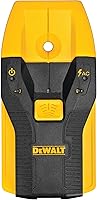
First, locate the studs and mark the proposed opening. A stud finder can help identify framing and center a mark; the DEWALT Stud Finder detects wood and metal to a depth of 3/4 in.
A stud finder does not show whether a cavity is clear or safe to cut. Check for wiring and pipes through a safe inspection point, or have a qualified installer inspect the wall when you cannot confirm what is inside.
Which dimensions should you check before framing?
Check the required opening width, height, and depth, then verify every clearance and power requirement in the manual. Don’t size the cavity from the fireplace’s exterior dimensions alone.
Exterior measurements describe the unit. The rough opening can differ because the installation may need space for mounting hardware, trim, or clearance around the body.
Also confirm whether the model supports fully recessed, semi-recessed, or wall-mounted installation. Tehanld describes three options for its 60 in fireplace, which helps if your wall depth is limited, but the manual still governs how each setup must be done.
The Tehanld is 60 in wide, so check the available wall span as well as depth. Its low-profile body can suit a wide feature wall, while a narrower wall or a cavity with obstructions may call for a smaller model or a surface-mounted setup.
When should you choose a semi-recessed or wall-mounted setup?
Choose semi-recessed installation when the model permits it and the cavity cannot accommodate a full recess. Choose wall mounting when you want to avoid opening the wall or the cavity is too shallow for an approved recess.
Tehanld describes fully recessed, semi-recessed, and flat wall-mounted options. The R.W.FLAME model is described as recessed and wall mounted, giving you two ways to plan around the wall rather than forcing a full recess.
Wall mounting keeps the body outside the cavity, so it projects into the room. Semi-recessing can reduce that projection, but only if the manual supports the method and provides the correct mounting details.
For a built-in look, consider the surrounding design before construction. Electric fireplace surround ideas can help you plan the wall finish around the unit.
What can block a recessed fireplace opening?
Wiring, pipes, insulation, blocking, and uneven framing can limit or prevent installation in a planned spot. Identify those conditions before cutting a rough opening.
A stud finder locates some framing and may detect live wires, but it does not identify every hazard or establish that the cavity is empty. Treat the tool as one step in the inspection, not as clearance to cut.
If services cross the planned area, choose another location or ask a qualified professional to assess the work. Don’t move wiring or plumbing unless you are qualified and the work meets local requirements.
How should you choose a recessed electric fireplace depth?
Choose the model whose installation requirements fit the smallest measured cavity depth, the wall opening, and the location’s power setup. If a measurement is close, verify it with the manual or a qualified installer before ordering or cutting.
Use this sequence:
- Find the exact model’s installation manual.
- Mark the planned width and height on the wall.
- Locate studs and check the cavity for obstructions.
- Measure usable depth at multiple points.
- Compare all measurements and clearances with the manual.
- Confirm the approved mounting method and power access.
The R.W.FLAME is a sensible option to consider when its stated 3.86 in chamber depth and 42 in width suit your wall. Skip it if your opening is too narrow or its manual’s requirements exceed the cavity you have.
The Tehanld suits shoppers who want a 60 in linear fireplace with several stated mounting options. Skip it if you cannot fit its width or if the installation manual does not approve the mounting method your wall needs.
For either model, plan the finished wall and viewing height before framing. The guide to how high to hang an electric fireplace covers placement height, which is separate from cavity depth but affects the overall wall layout.
What common mistakes lead to a poor fit?
The most common mistake is treating the unit’s body depth as the full installation requirement. Another is assuming a nominal 2 x 4 wall has enough clear space without measuring the actual cavity.
Avoid these errors:
- Cutting the opening before checking the exact manual.
- Measuring only one point inside the cavity.
- Ignoring wiring, pipes, blocking, or uneven framing.
- Assuming “ultra-thin” means the fireplace fits every shallow wall.
- Using semi-recessed installation without confirming the model supports it.
- Forgetting that a wall-mounted fireplace projects into the room.
- Planning the opening without confirming width, height, and power access.
A careful fit check takes less effort than changing a finished wall. If any measurement or clearance remains uncertain, settle it before construction begins.
What if the fireplace is deeper than the cavity?
Don’t force a deeper fireplace into a shallow cavity or reduce its required clearances. Pick an approved semi-recessed or wall-mounted setup, redesign the wall with professional help, or choose a model that fits.
Measure the usable cavity, then compare it with the exact model’s recessed electric fireplace depth and installation requirements. Choose R.W.FLAME if its narrower width and stated depth suit your measured wall.
Choose Tehanld if you need a 60 in fireplace and its approved mounting options fit the space. If neither fits, look for another model or use an approved surface-mounted installation.
Frequently asked questions
How deep should a recessed electric fireplace be?
There is no single required depth for every recessed electric fireplace. Measure the usable cavity and compare it with the model’s body, rough opening, and clearance requirements in its installation manual.
If the cavity is too shallow, use an approved semi-recessed or wall-mounted setup, or choose another model.
Can an electric fireplace fit in a 2 x 4 wall?
Some models are designed for 2 x 4 walls, but the nominal wall size alone does not confirm fit. Check the exact opening and clearance requirements, then measure the actual cavity after accounting for drywall, framing, and anything inside the wall.
The R.W.FLAME 42 in model is described as fitting 2 x 4 and 2 x 6 studs.
Is a 3.5 inch deep fireplace fully recessed?
A 3.5 in body may fit a cavity with at least that much usable depth, but the rough opening and clearances can require additional space. Follow the exact model’s installation manual before framing.
If the cavity is too shallow, check whether the model allows semi-recessed or wall-mounted installation.
How do I check the depth inside a wall?
Locate the framing, then measure through a safe inspection point or have a qualified installer inspect the cavity. Check for wiring, pipes, insulation, and other obstructions before cutting.
A stud finder can help locate framing, but it does not prove the cavity is clear.